Did you know that some of the everyday foods you enjoy have surprising origins? From potatoes to chocolate, the history and global journey of these foods is nothing short of astonishing. Read with me as we explore the fascinating stories behind 10 foods that have become staples in our diets.
Click here to learn how to get started investing in 2024 with no effort!
1. Potatoes
Potatoes are a staple food in many cuisines around the world, but their origins might surprise you. Contrary to popular belief, potatoes did not originate from Ireland or Idaho. In fact, they can be traced back to the Andes Mountains in South America, where they were first cultivated by ancient civilizations thousands of years ago.
The Incas were one of the earliest civilizations to cultivate potatoes. They recognized the potential of this tuberous root and integrated it into their daily lives. The Incas grew different varieties of potatoes, each with its own unique flavor and texture. These early potatoes were smaller and more colorful than the ones we are familiar with today.
It wasn’t until the 16th century that potatoes made their way to Europe. Spanish conquistadors brought them back from their expeditions to the New World and introduced them to the European diet. However, potatoes were initially met with resistance and prejudice. Many Europeans viewed them as strange and potentially poisonous. It took several decades for potatoes to gain acceptance and become a mainstay in European cuisine.
Today, potatoes are one of the most widely consumed foods in the world. They are incredibly versatile and can be prepared in countless ways. Whether mashed, roasted, or fried, potatoes continue to be a beloved ingredient in dishes from all corners of the globe.
Click here to get over 500 easy family dinner ideas at your fingertips!
2. Tomatoes
Tomatoes are a common ingredient in many dishes, from salads to sauces. However, their journey to our plates is a fascinating one. Contrary to popular belief, tomatoes are not native to Italy, but rather to the region that is now modern-day Peru.
The ancient civilizations of South America, such as the Aztecs and Incas, were the first to cultivate tomatoes. They grew different varieties, ranging in size, shape, and color. Tomatoes were initially used for medicinal purposes, as they were believed to have healing properties. It wasn’t until later that they were incorporated into culinary traditions.
When Spanish explorers arrived in the New World, they encountered tomatoes and brought them back to Europe. However, tomatoes were met with suspicion and considered poisonous by many Europeans. It took several centuries for tomatoes to gain widespread acceptance as a food item.
In Italy, tomatoes were initially grown as ornamental plants before they were recognized for their culinary potential. It was the invention of pizza in Naples that popularized the use of tomatoes in Italian cuisine. From there, tomatoes spread throughout Europe and eventually became a staple in many dishes around the world.
Today, tomatoes are a key ingredient in countless recipes and are enjoyed in various forms, from fresh to canned. They are not only delicious but also packed with essential vitamins and nutrients, making them a healthy addition to any diet.
Click here to learn how to get started investing in 2024 with no effort!
3. Rice
Rice is a dietary staple for billions of people around the world, particularly in Asia. Its origins can be traced back to ancient civilizations that cultivated and revered this grain for its nutritional value and cultural significance.
The exact origin of rice is still a matter of debate among historians and archaeologists. However, evidence suggests that rice was first domesticated in the Yangtze River valley in China around 10,000 years ago. From there, it spread to other parts of Asia, including India, Thailand, and Vietnam.
Rice played a crucial role in the development of ancient civilizations. In China, it was considered a sacred grain and associated with fertility and abundance. In India, rice was believed to be a gift from the gods and was an important part of religious ceremonies.
The cultivation of rice required sophisticated irrigation systems and the labor of many people. It became a central part of agricultural societies, shaping their economies and social structures. Rice cultivation techniques and varieties were passed down through generations, leading to the development of unique rice cultures in different regions.
Today, rice remains a staple food for more than half of the world’s population. It is a versatile ingredient that can be cooked in various ways and used in a wide range of dishes. From sushi in Japan to biryani in India, rice continues to be a vital part of many culinary traditions.

4. Coffee
Coffee is one of the most beloved beverages in the world, but its journey from the hills of Ethiopia to global popularity is a remarkable one. Legend has it that coffee was discovered by a goat herder named Kaldi, who noticed that his goats became more energetic after eating the berries of a certain plant.
Kaldi shared his discovery with the local monks, who began to use the berries to stay awake during long hours of prayer. Word of this magical plant spread and coffee cultivation and consumption spread throughout the Arabian Peninsula.
Coffee houses, known as qahveh khaneh, became popular gathering places in cities like Constantinople (now Istanbul) and Mecca. These establishments served as social hubs where people would gather to drink coffee, engage in intellectual discussions, and play games.
In the 17th century, coffee made its way to Europe through trade routes. Initially, it was seen as a luxury item and reserved for the wealthy elite. However, as coffee houses began to spring up across Europe, the drink became more accessible to the general population.
Today, coffee is grown in countries around the world, from Brazil to Vietnam. It is a multi-billion dollar industry that supports millions of farmers and workers. From espressos to lattes, coffee continues to bring people together and provide a much-needed boost of energy and enjoyment.
Click here to get over 500 easy family dinner ideas at your fingertips!
5. Chocolate
Chocolate is a beloved treat enjoyed by people of all ages. Its rich and creamy taste is the result of a complex process that starts with the cacao tree. The origins of chocolate can be traced back to the ancient civilizations of Mesoamerica, such as the Mayans and Aztecs.
In Mesoamerican cultures, cacao beans were highly valued and used as currency. The beans were also used to make a bitter beverage called xocoatl, which was reserved for the elite. The Mayans believed that cacao was a divine gift and used it in religious ceremonies.
When the Spanish conquistadors arrived in the New World, they encountered cacao and brought it back to Europe. However, the bitter taste of the cacao beans was not well-received by Europeans. It wasn’t until sugar was added to the mixture that chocolate became more palatable and gained popularity.
Over the centuries, chocolate evolved into various forms, from solid bars to hot beverages. It became associated with indulgence and pleasure, and its consumption spread throughout Europe and eventually the rest of the world.
Today, chocolate is enjoyed in countless forms, from milk chocolate bars to dark chocolate truffles. It is not only a delicious treat but also believed to have health benefits, thanks to its antioxidant properties. The journey of chocolate from ancient Mesoamerica to our modern-day cravings is truly a testament to its enduring appeal.
6. Corn
Corn, or maize, is a staple food in many cultures around the world. It is believed to have been domesticated in Mesoamerica thousands of years ago and has since become one of the most important crops globally.
The ancient civilizations of Mesoamerica, such as the Maya and Aztecs, cultivated and revered corn. They developed various techniques to grow different varieties of corn, each with its own unique characteristics. Corn played a central role in their religious rituals and daily lives.
When European explorers arrived in the Americas, they encountered corn and brought it back to Europe. Corn was initially viewed as a curiosity and grown as an ornamental plant. However, its nutritional value and versatility soon became apparent, and it began to be cultivated as a food crop.
Corn quickly spread to other parts of the world, including Africa and Asia. It adapted to different climates and became a vital source of sustenance for many communities. Today, corn is used in a wide range of products, from tortillas and cornbread to popcorn and ethanol.
The story of corn is not just one of culinary importance, but also of cultural significance. It is deeply intertwined with the history and traditions of the Americas and continues to be a symbol of resilience and sustenance.

7. Bananas
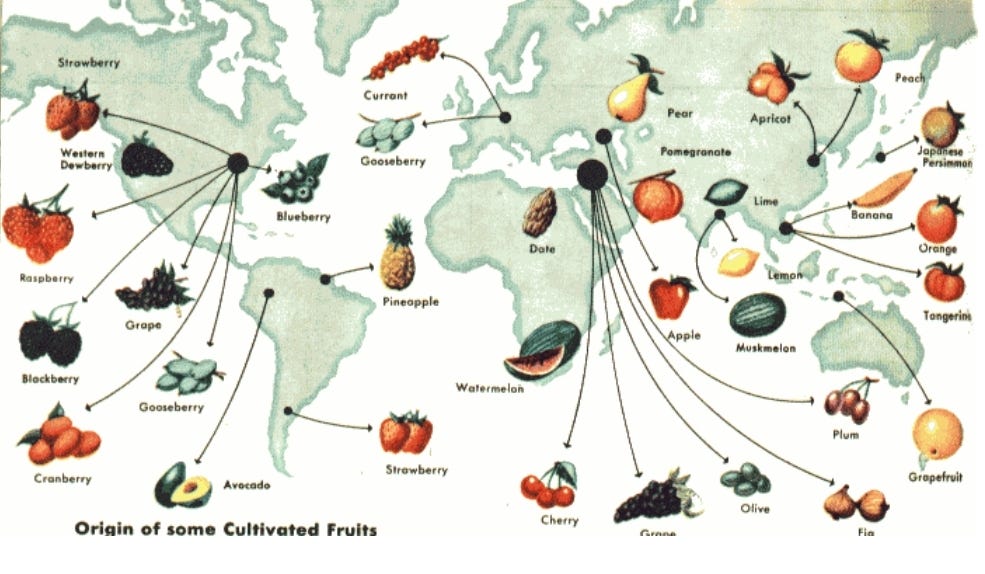
Bananas are a popular fruit enjoyed around the world, but their history and cultural significance are often overlooked. Bananas are believed to have originated in Southeast Asia and have been cultivated for thousands of years.
The cultivation of bananas spread to different parts of the world through trade and exploration. Arab traders brought bananas to Africa, while Portuguese sailors introduced them to the Americas. Bananas thrived in tropical climates and became a vital source of food for many communities.
In the late 19th century, bananas began to be exported on a large scale. Companies like United Fruit Company (now Chiquita Brands International) played a significant role in the commercialization and marketing of bananas. This led to the establishment of banana plantations in countries like Honduras, Costa Rica, and Colombia.
Bananas became a symbol of economic power and exploitation. The United Fruit Company had a significant influence over the politics and economies of the countries where it operated. This led to social and political unrest, which is often referred to as the “banana republic” era.
Today, bananas are one of the most popular fruits in the world. They are not only delicious but also packed with essential nutrients like potassium and vitamin C. Whether enjoyed on their own or used in recipes, bananas continue to be a beloved fruit with a rich history.
Click here to learn how to get started investing in 2024 with no effort!
8. Pasta
Pasta is a staple in Italian cuisine and has become a beloved dish worldwide. However, its origins are not as straightforward as one might think. While pasta is often associated with Italy, its roots can be traced back to ancient civilizations in the Middle East and Asia.
The ancient Egyptians were one of the first civilizations to consume pasta-like dishes. They made a type of noodle from a mixture of flour and water, which they dried in the sun. These noodles were similar to what we now know as “pasta.”
From Egypt, pasta-making techniques spread to other parts of the Middle East and Asia. The Chinese, for example, have a long history of noodle-making. Marco Polo is often credited with bringing pasta to Italy from China in the 13th century, but it is likely that pasta was already known in Italy before his travels.
In Italy, pasta became deeply ingrained in culinary traditions and regional cuisines. Each region developed its own pasta shapes and recipes, resulting in a wide variety of dishes. Pasta-making techniques were passed down through generations, and artisanal pasta production became a source of pride and craftsmanship.
Today, pasta comes in countless shapes and sizes, each suited for different sauces and preparations. From spaghetti with marinara sauce to lasagna layered with cheese and meat, pasta continues to be a versatile and satisfying meal.

Click here to get over 500 easy family dinner ideas at your fingertips!
9. Bread
Bread, a staple in many cultures, has a rich history that dates back thousands of years. The origins of bread can be traced back to ancient Egypt, where it was a dietary staple and a symbol of life. The Egyptians discovered that by grinding wheat berries into a fine powder and mixing it with water, they could create a dough that could be baked into a delicious and nutritious food.
Over time, the art of breadmaking spread across the globe, with each culture putting its own unique spin on the process. From the baguettes of France to the naan bread of India, bread has become a versatile food that is enjoyed in many different forms. So the next time you bite into a slice of warm, crusty bread, remember the long and fascinating journey it took to reach your plate.
10. Cheese
Cheese, a delicious and versatile food that comes in countless varieties, has a history that dates back thousands of years. The origins of cheese can be traced back to ancient Mesopotamia, where it was accidentally discovered by nomadic tribes who stored milk in animal stomachs.
Over time, the process of cheesemaking was refined and spread across the globe. Different cultures developed their own unique methods of cheesemaking, resulting in a wide variety of flavors, textures, and aromas.
Today, cheese is enjoyed in countless ways, from a simple slice on a sandwich to a decadent cheese platter. So the next time you indulge in a piece of cheese, remember the ancient origins of this delicious food and the craftsmanship that goes into its creation.
The stories behind everyday foods are often overlooked, but they offer a fascinating glimpse into the interconnectedness of cultures and the human desire for sustenance and enjoyment. From the humble potato to the crave-worthy chocolate, the origins of these foods are a testament to the resourcefulness of our ancestors.
So, grab a snack and savor the flavors that have traveled through time and across continents. The stories behind the familiar items in your pantry are waiting to be discovered and shared.
Thank you for reading!
For more insights on budget-friendly dinner ideas, easy dinner recipes, dessert recipes, meal plans, and the myriad of health benefits offered by natural foods, don’t forget to follow Homemaker Recipes. I’m here to help busy moms, health enthusiasts, and everyone in between discover the joys and benefits of home cooking! Home is where the best things are made!
Click here to get over 500 easy family dinner ideas at your fingertips!
Click here to learn how to get started investing in 2024 with no effort!